

- Factor 1: Bathroom Size and Layout
- Factor 2: Labour Costs
- Factor 3: Plumbing and Electrical Work
- Factor 4: Waterproofing
- Factor 5: Tiles — Floor and Wall
- Factor 6: Fixtures and Fittings
- Get a Free Bathroom Renovation Quote in Melbourne
- Factor 7: Demolition and Waste Removal
- Factor 8: Structural and Layout Changes
- Factor 9: Quality of Materials and Finishes
- Factor 10: Your Location Within Melbourne
- Frequently Asked Questions
- Final Thoughts
- Ready to Start Your Melbourne Bathroom Renovation?
You asked three contractors for a bathroom renovation quote. One said $14,000. Another said $28,000. The third said $42,000. Now you are staring at three very different numbers and wondering if someone is pulling your leg.
Nobody is. That is just how bathroom renovations work in Melbourne.
The truth is, bathroom renovation costs in Melbourne vary enormously — and for completely logical reasons. The size of your bathroom, the trades involved, the materials you choose, and whether you want to move a single pipe can each shift the final number by thousands of dollars.
According to the Housing Industry Association of Australia (HIA), the average bathroom renovation cost in Australia sits at around $26,000. But Melbourne — with its higher labour rates and older housing stock — can push that figure up or down depending on your project scope.
This guide breaks down the 10 key factors affecting bathroom renovation costs in Melbourne so you know exactly what you are paying for, what to expect at each budget level, and where you can genuinely save money without cutting corners.
Factor 1: Bathroom Size and Layout
Does Size Really Change the Price That Much?
Short answer: yes, significantly. More floor and wall space means more tiles, more waterproofing membrane, more grout, and more hours on the tools. A tiler charging $80 per square metre does not care whether your bathroom is 4 m² or 14 m² — the rate is the same. But the total hours add up fast.
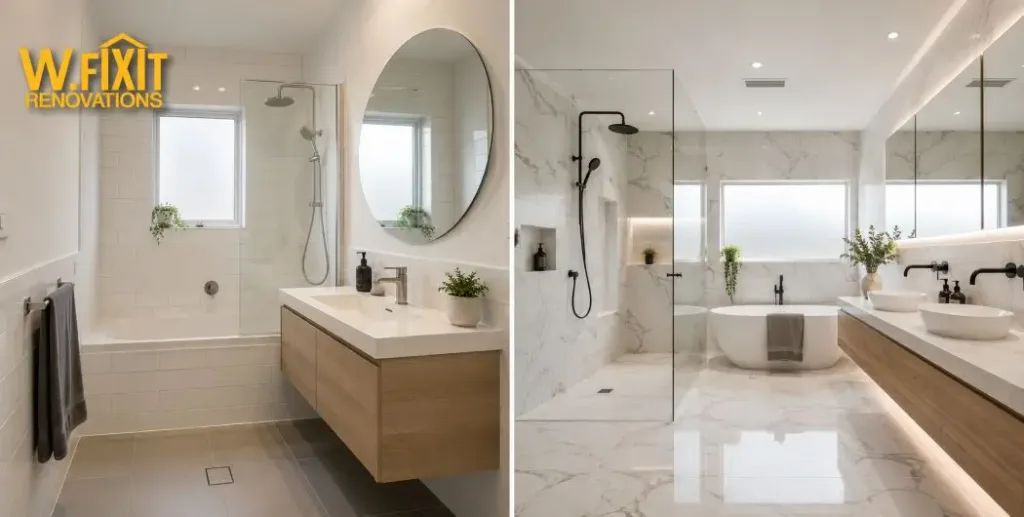
Here is a rough cost guide for different bathroom sizes in Melbourne based on current market rates:
| Bathroom Type | Estimated Cost Range (Melbourne) |
|---|---|
| Small bathroom (under 5 m²) | $8,000 – $15,000 |
| Standard family bathroom (5–8 m²) | $15,000 – $25,000 |
| Ensuite or master bathroom | $20,000 – $35,000 |
| Luxury or full remodel | $35,000 – $60,000+ |
Beyond size, the layout is where things get interesting. If your toilet, shower, vanity, and bath stay in the same spots, the plumber does a relatively clean job. Move even one of those fixtures, and you are looking at drain relocation, new pipe runs, and potentially a building permit. We cover that in more detail in Factor 8 below.
Budget tip: keeping the existing bathroom layout is the single most effective way to control costs. You can still transform a space completely with new tiles, fixtures, and lighting — without touching a single drainpipe.
Factor 2: Labour Costs
Why Labour Eats 40–50% of Your Renovation Budget
Labour is consistently the largest single item in any bathroom renovation. According to data from HBK Constructions, Melbourne trades average around $68.80 per hour — higher than Brisbane ($62/hr) and comparable to Sydney.
A typical Melbourne bathroom renovation involves at least four trades: a plumber, a tiler, an electrician, and a waterproofer. Each has their own call-out rates, minimum hours, and scheduling requirements. Getting all of them on site in the right order — without delays — requires coordination that has its own cost too.
Here is what you can generally expect from individual trades in Melbourne:
- Plumber: $2,500 – $5,650 for a standard bathroom renovation (no pipe relocation)
- Electrician: $800 – $2,500 for lighting, exhaust fan, and heated towel rail
- Tiler: $35 – $120 per m² for labour only, depending on tile size and pattern
- Waterproofer: $2,000 – $3,500 including materials and mandatory inspection
One practical way to manage bathroom renovation labour costs is working with a company that coordinates all trades in-house. It removes the scheduling headache, reduces the risk of trades blaming each other for delays, and often brings the total cost down compared to hiring separately.
At W.FixIt, we manage the full trade sequence for our clients across Melbourne’s South-East — so nothing gets held up waiting on someone else’s schedule. See how our bathroom renovation service works.
Factor 3: Plumbing and Electrical Work
The Hidden Costs Beneath Your Bathroom Floor
Most homeowners focus on what they can see — tiles, vanity, taps. But the plumbing and electrical work happening behind walls and under floors is often where the real cost lives.
Simple fixture replacement (swapping a toilet suite, installing a new shower head, replacing taps) without moving anything is relatively affordable. But once pipes need to be relocated, drainage points shifted, or electrical circuits rewired, costs climb quickly.
There is another consideration specific to older Melbourne homes. Properties built before the 1980s may have copper or galvanised steel plumbing that has reached the end of its serviceable life. Discovering this during demolition — which happens more than you would think in suburbs like Dandenong, Hallam, and Hampton Park — adds $2,000 to $5,000 to the plumbing budget for replacement.
On the electrical side, common additions that affect bathroom renovation expenses include:
- LED downlights and exhaust fans with humidity sensors
- Heated towel rails
- Underfloor heating (one of the most requested upgrades in Melbourne’s winters)
- Dedicated circuits for new appliances
All electrical work in a bathroom must be carried out by a licensed electrician. Non-negotiable. Unlicensed electrical work in a wet area is illegal, and it will void your home insurance if something goes wrong later.
Factor 4: Waterproofing
The One Line Item You Should Never Try to Cut
Waterproofing is the least glamorous part of any bathroom renovation. No one takes photos of the membrane. But it is arguably the most important investment you will make in the entire project.
In Victoria, waterproofing in domestic wet areas is a legal requirement under Australian Standard AS 3740 and the National Construction Code. Shower walls must be waterproofed to a minimum height of 1,800 mm above finished floor level. An independent waterproofing inspection is mandatory before tiling can begin — and only VBA-registered waterproofers can certify compliant work in Victoria.
What does it cost? Professional bathroom waterproofing in Melbourne runs $2,000 to $3,500 for a standard bathroom, including licensed application, materials, and the mandatory inspection certificate.
Now consider the alternative. Failed waterproofing requires a complete bathroom strip-out to fix — demolition, drying the structure, replacing any damaged timber, re-waterproofing, and retiling. The repair bill typically runs $15,000 to $30,000. For the sake of a $2,500 job done right the first time, it simply does not make sense to compromise here.
Always ask your contractor to confirm they are VBA-registered and that they will provide a written compliance certificate on completion.
Factor 5: Tiles — Floor and Wall
Where Your Taste and Your Budget Have a Conversation
Tiles are where many bathroom renovations either stay on budget or quietly fall off a cliff. There is an enormous range in both material cost and installation complexity, and the two multiply each other.
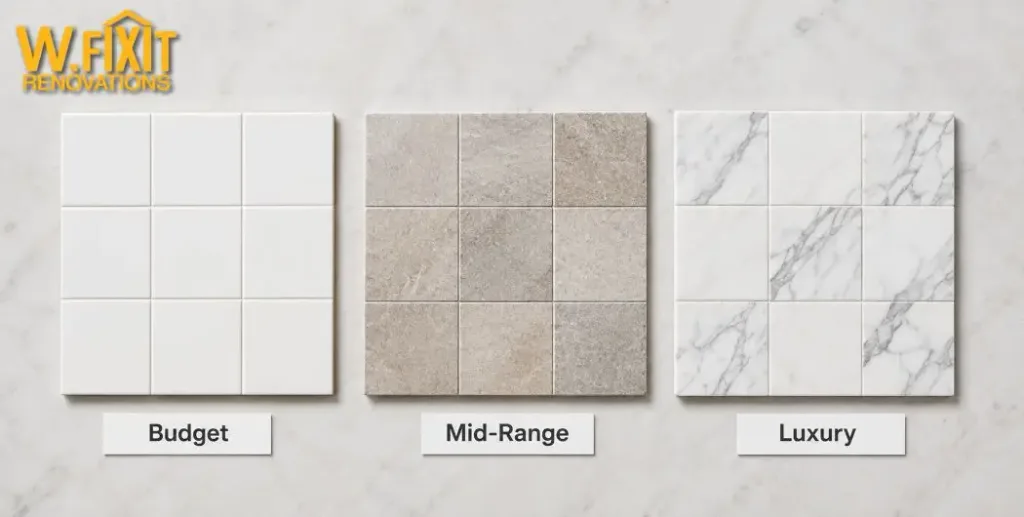
Here is a realistic breakdown of tiling costs in Melbourne:
| Tile Type | Material Cost (per m²) | Install Labour (per m²) |
|---|---|---|
| Budget ceramic / porcelain | $30 – $55 | $35 – $60 |
| Mid-range porcelain / stone-look | $50 – $100 | $60 – $90 |
| Premium natural stone (marble, travertine) | $80 – $300+ | $100 – $150+ |
A few things that push tiling costs higher than homeowners expect:
- Large-format tiles (600 x 600 mm and above) cost more to lay because they require a flatter substrate and more careful placement to avoid lippage
- Herringbone and diagonal patterns take longer to lay and produce more waste — expect a 15–25% labour premium
- Rectified tiles need tighter grout lines and more experienced tilers
- Full floor-to-ceiling tiling obviously uses more material than a half-tiled wall
Practical tip: choose a simpler, larger-format tile for most of the bathroom and use one statement tile on a feature wall. You get the visual impact of premium material at a fraction of the full-bathroom cost.
Factor 6: Fixtures and Fittings
Vanities, Shower Screens, Tapware — Where Budget Goes Quietly
Fixtures are fun to shop for. They are also where renovation budgets tend to stretch in ways that felt reasonable at the time. A better-looking shower screen here, a nicer tap set there, a wall-hung toilet because the salesperson was convincing — and suddenly you are $4,000 over what you planned.
Here is a realistic supply-and-install cost guide for bathroom fixtures in Melbourne:
| Fixture | Budget Range (Supply + Install) |
|---|---|
| Vanity (standard off-the-shelf) | $600 – $2,500 |
| Custom vanity (cabinetry) | $3,000 – $8,000+ |
| Toilet suite (standard) | $400 – $1,500 |
| Shower screen (frameless glass) | $800 – $3,200 |
| Tapware set | $150 – $2,000+ |
| Heated towel rail | $300 – $900 |
The biggest lever here is the vanity. Off-the-shelf vanities from bathroom suppliers are perfectly solid and look great — custom cabinetry is a luxury tier that adds significant cost for a relatively modest visual upgrade unless the space genuinely demands it.
Matte black tapware, wall-hung toilets, and frameless shower screens are consistently the most requested features in Melbourne bathrooms right now. Mid-range versions of all three deliver strong results without the premium brand price tag.
Get a Free Bathroom Renovation Quote in Melbourne
W.FixIt specialises in bathroom renovations across Melbourne’s South-East — Berwick, Narre Warren, Cranbourne, Dandenong, Lynbrook, Keysborough, Hallam, Lyndhurst, and surrounding suburbs. Whether you are planning a tidy budget refresh or a full transformation, we provide clear, itemised pricing with no hidden costs.
Request Your Free, No-Obligation Quote Today →Factor 7: Demolition and Waste Removal
Stripping Out an Old Bathroom Costs More Than You Think
Before anything new goes in, everything old has to come out. Demolition is one of those bathroom renovation costs that often gets underestimated or forgotten altogether in early budgeting conversations.
Stripping a standard Melbourne bathroom runs $800 to $2,500 for labour, depending on the size of the space and what is being removed. Add skip bin hire — typically $300 to $600 across Melbourne’s South-East suburbs — and you have a meaningful line item before any building work has begun.
There is one particular cost that catches owners of older Melbourne homes off guard: asbestos. Homes built before 1990 frequently contain asbestos in bathroom wall sheeting, floor tiles, and tile adhesives. Under SafeWork Australia regulations, any asbestos-containing material must be removed by a licensed asbestos removalist. Depending on the extent, this adds $2,000 to $8,000+ to your project. If your home is 30 years or older, budget for an asbestos inspection before you get any renovation quotes.
Factor 8: Structural and Layout Changes
The Most Expensive Decision in Any Bathroom Renovation
Moving walls or relocating plumbing is where bathroom renovation pricing in Melbourne can jump dramatically. This is not scaremongering — it is just the reality of what structural and drainage work involves.
When you relocate a toilet, shower, or bath, the drainage point has to move with it. That means cutting into the slab (or floor joists in an older home), repositioning the drain, and running new pipe back to the stack. Relocating a single toilet can add $1,500 to $3,000 to plumbing costs. Shifting a shower or bath runs $2,000 to $4,000.
If walls need to come down, a building permit is typically required under the Building Act 1993 (Victoria). Permits add $500 to $2,000+ to the project cost and extend the timeline by two to six weeks for approval. If a load-bearing wall is involved, a structural engineer is required — add $800 to $2,500 for their assessment and drawings.
The practical upside: not every bathroom needs a layout change to feel transformed. New tiles, a new vanity, an updated shower screen, and quality lighting can make a bathroom feel completely different without moving a single pipe. If your budget is fixed, keeping the layout is the smartest call you can make.
Not sure whether your bathroom needs structural work? Get a free on-site assessment from the W.FixIt team – we will tell you exactly what is and is not necessary.
Factor 9: Quality of Materials and Finishes
Budget vs Mid-Range vs Luxury — Where the Real Difference Lives
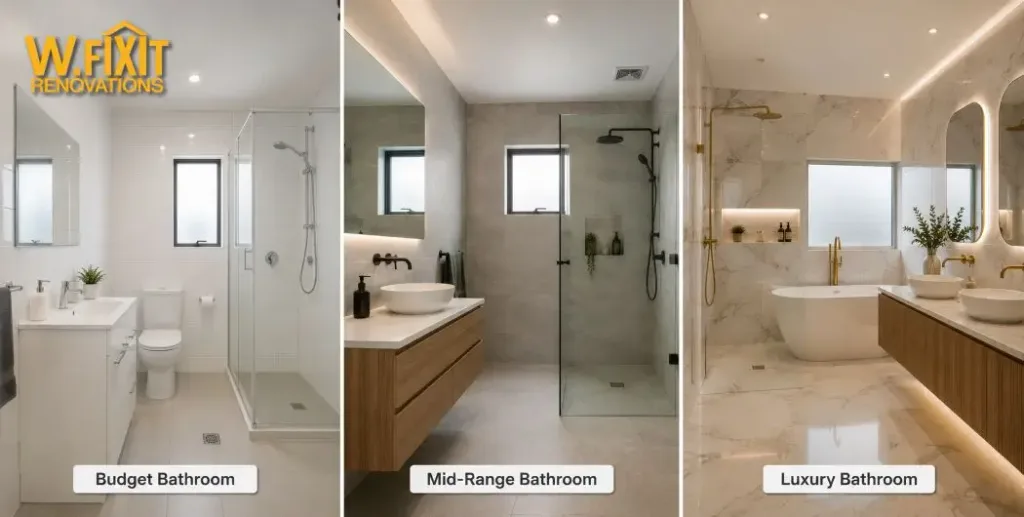
Material quality is the primary reason two bathrooms of identical size can cost $12,000 and $50,000 respectively. It is not just the price of the tile or the tap — it is the installation complexity that premium materials often carry with them.
Here is how the three tiers typically look in a Melbourne bathroom renovation:
Budget ($8,000 – $15,000): Standard ceramic tiles in white or light grey. Chrome tapware. Off-the-shelf vanity. Basic toilet suite. Functional and clean — does everything a bathroom needs to do.
Mid-range ($15,000 – $30,000): Stone-look porcelain floor tiles, a feature wall, matte black or brushed nickel tapware, semi-custom or floating vanity, frameless or semi-frameless shower screen. This is where most Melbourne homeowners land for a renovation they will be happy with for 15+ years.
Luxury ($35,000+): Natural marble or travertine, custom cabinetry, wall-hung toilet with in-wall cistern, freestanding bath, smart features (sensor taps, heated floors, Bluetooth mirrors), designer lighting, premium shower system. The finishes are exceptional — so is the installation skill required to achieve them.
One thing worth noting: independent product testing consistently finds that mid-range bathroom products deliver 80–90% of premium product performance at 40–60% of the cost. For most homeowners, mid-range is genuinely the sweet spot.
Factor 10: Your Location Within Melbourne
Does Your Suburb Actually Affect Renovation Pricing?
It does — though perhaps not in the way you might expect. The biggest location-driven variable is not the suburb itself but rather trade accessibility and travel costs.
Inner-city Melbourne suburbs like Richmond, South Yarra, and Fitzroy often attract higher call-out fees because of parking restrictions, access constraints, and the premium that inner-city trades command. Outer Melbourne suburbs can attract travel fees if a contractor has to drive 45 minutes each way.
Melbourne’s South-East — covering suburbs like Berwick, Narre Warren, Cranbourne, Endeavour Hills, Lynbrook, Keysborough, and Lyndhurst — is well-served by local renovation contractors. Working with a local team means shorter travel times, no travel surcharges, and trades who understand the housing stock in the area.
There is a second location factor: the age of the housing. Older suburbs in the South-East, including parts of Dandenong, Hallam, and Hampton Park, have homes built in the 1960s through 1980s. These homes more frequently carry outdated plumbing, ageing electrical systems, or asbestos-containing materials — all of which add cost once demolition begins. Getting a building inspection before you finalise your renovation budget is a sensible step if your home is more than 30 years old.
Frequently Asked Questions
The average bathroom renovation cost in Melbourne ranges from $15,000 to $30,000 for a standard family bathroom, which positions Victoria as one of the higher-cost states for renovation work. Small bathroom renovations can start from around $8,000, while full luxury remodels with premium finishes, structural changes, and high-end fixtures typically cost $35,000 to $60,000+. The HIA puts the national average at approximately $26,000, though Melbourne’s higher labour rates push local projects toward the upper end of that range.
Labour is consistently the largest cost in any bathroom renovation, typically accounting for 40–50% of the total project budget. Within the labour component, plumbing and tiling tend to be the highest individual trade costs – particularly when structural changes, drainage relocation, or specialised tile patterns are involved. After labour, material quality (tiles, vanity, tapware) is the next biggest driver of the final price.
Yes – significantly. Retaining your existing layout means plumbing drain points, pipe runs, and electrical conduits stay exactly where they are. This alone can save $3,000 to $8,000+ compared to a project that involves relocating fixtures. It is the most effective single strategy for managing bathroom renovation costs without compromising the quality or appearance of the finished result.
For a standard Melbourne bathroom renovation without significant pipe relocation, total plumbing costs typically run $2,500 to $5,650. Melbourne plumbers generally charge $100 to $150 per hour plus call-out fees. If drainage relocation, pipe replacement, or hot water system upgrades are needed, costs can increase considerably – budgeting $5,000 to $12,000 for complex plumbing work is not unusual.
The most effective strategies are: keep the existing layout wherever possible; choose mid-range tiles and use a premium tile on one feature wall only; select off-the-shelf vanities rather than custom cabinetry; work with a contractor who manages all trades in-house to reduce scheduling costs; plan thoroughly before work starts (mid-project changes are expensive); and get at least two or three detailed quotes before committing. A transparent, itemised quote from your contractor is the best way to understand exactly what you are paying for.
Final Thoughts
Understanding the factors affecting bathroom renovation costs in Melbourne removes the guesswork from your planning. Size, labour, plumbing, waterproofing, tiles, fixtures, demolition, structural changes, material quality, and location — each plays a role in where your project lands on the pricing spectrum.
The good news is that a well-planned renovation does not require an unlimited budget. Most Melbourne homeowners achieve a bathroom they genuinely love at the mid-range tier — quality materials, experienced trades, a clean result that lasts well over a decade.
The key is knowing what you need before work starts. Every cost factor covered in this guide is something a good contractor should walk you through before a single tile comes off the wall.
Ready to Start Your Melbourne Bathroom Renovation?
W.FixIt’s bathroom renovation specialists serve Melbourne’s South-East — including Berwick, Narre Warren, Cranbourne, Keysborough, Hallam, Lyndhurst, Lynbrook, Endeavour Hills, and Dandenong. We provide detailed, itemised renovation quotes so you know exactly where every dollar goes. No hidden costs. No surprises
Book a Free On-Site Assessment Today→