
- Why South-East Melbourne Needs Its Own Budget Rules
- Not sure where to start?
- What Actually Drives Your Renovation Budget
- A Real Worked Example: Bathroom Renovation Budget
- Permits and the BPC: What Changed in 2025
- Staging a Renovation Budget Across Multiple Rooms
- Common Budget Mistakes We See in the South-East
- Final Thoughts
- Get a Realistic Budget for Your Suburb
- Frequently Asked Questions
Every renovation budget starts the same way. You open a spreadsheet, you type in a number that feels right, and then reality shows up with a crowbar.
South-east Melbourne makes this worse in some very specific ways. Berwick isn’t Brighton. Cranbourne isn’t Caulfield. Yet most renovation guides lump the entire region together and hand you one generic number, as if a 1990s brick veneer in Hampton Park costs the same to renovate as a period home in Bentleigh.
It doesn’t. So let’s fix that.
This guide breaks down what actually drives renovation costs across the south-east, walks through a real budget example, and covers the compliance changes most articles haven’t caught up on yet. No inflated numbers, no scare tactics, just a straight plan you can work from.
Why South-East Melbourne Needs Its Own Budget Rules
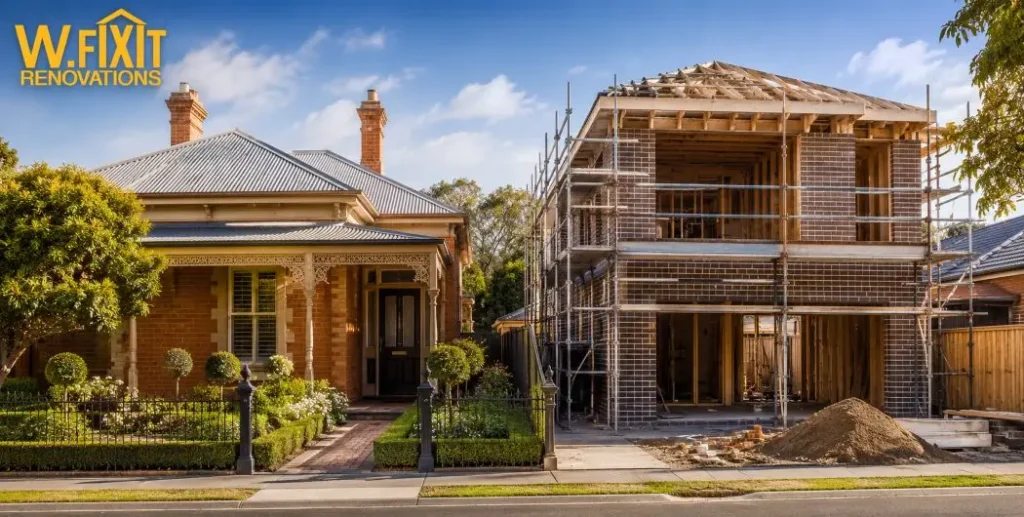
The south-east corridor covers a huge range of property types and land conditions, from established inner suburbs like Bentleigh and Oakleigh through to growth areas like Clyde and Officer. That range is exactly why a single “average renovation cost” figure is close to useless here.
A few local factors matter more than most budget guides admit:
Soil type. Large parts of the south-east, particularly around the Dandenong and Casey growth corridors, sit on reactive clay soils that expand and contract with moisture. That affects footing design on any renovation involving structural work, and it’s a cost conversation worth having with your builder before you fall in love with a floor plan.
Housing stock age. Suburbs like Dandenong, Springvale, and parts of Clayton have a large share of older homes built from the 1960s to 1980s. These often hide outdated wiring, old plumbing, or asbestos-containing materials behind the walls, which only becomes obvious once demolition starts.
Established vs growth areas. Established suburbs (Bentleigh, Caulfield, Oakleigh) tend to have tighter blocks and narrower side access, which pushes up labour costs for material handling. Growth corridor suburbs (Clyde North, Officer, Cranbourne East) usually have easier site access but may face longer council processing times due to sheer volume of development applications.
None of this means renovating in the south-east is riskier than anywhere else in Melbourne. It just means your budget needs local context, not a citywide average.
Not sure where to start?
W.FixIt is a licensed renovation team serving Melbourne’s south-east, from Berwick and Narre Warren to Dandenong and the Mornington Peninsula. Get a free, obligation-free quote and see how a properly vetted contractor makes the whole process easier.
Get a free, obligation-free quote →What Actually Drives Your Renovation Budget
Before suburb-specific numbers, it helps to understand the ingredients that make up any renovation budget. Most homeowners split this into four buckets.
1. Trade and Labour Costs
Labour typically makes up the largest share of a renovation budget. Site access, project complexity, and how many trades need to be coordinated all affect this figure. A straightforward bathroom refresh needs a plumber, electrician, tiler, and waterproofer. A full renovation with structural changes adds a builder, carpenter, and possibly a structural engineer to that list.
2. Materials and Fixtures
This is the part homeowners enjoy choosing and the part that quietly wrecks budgets. Tapware, tiles, benchtops, and cabinetry all come in enormous price ranges. A vanity can cost $300 or $3,000 and look similar in a photo. Set your material budget before you start browsing showrooms, not after.
3. Permits and Compliance
Structural changes, plumbing relocations, and most bathroom or kitchen renovations that touch wet areas require council or building surveyor approval. We cover this in detail below, because the regulatory landscape changed in 2025 and a lot of renovation content online still hasn’t updated.
4. Contingency
Every renovation budget needs a buffer for the unexpected, and older south-east homes are more likely to reveal surprises once walls open up. Building in a contingency isn’t pessimism. It’s just planning for the version of the project that’s more likely to actually happen.
A Real Worked Example: Bathroom Renovation Budget
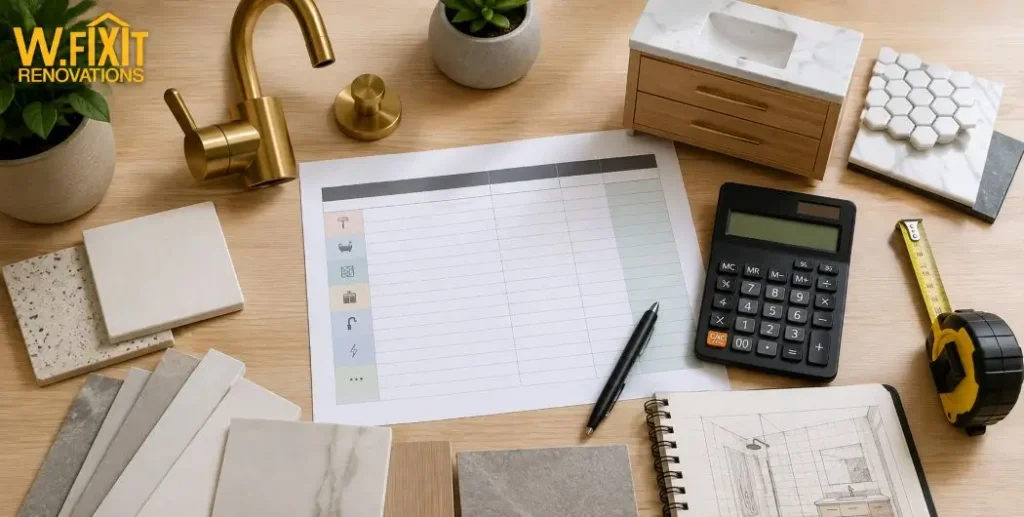
Instead of giving you another vague percentage range, here’s what a mid-tier bathroom and ensuite renovation budget can look like when broken down by category. These figures reflect the kind of project scope W.FixIt regularly quotes across suburbs like Berwick, Narre Warren, and Dandenong, and they’re deliberately presented as a planning tool, not a fixed quote.
| Budget Category | Approximate Share |
|---|---|
| Demolition and disposal | 5–8% |
| Plumbing and electrical | 15–20% |
| Waterproofing and tiling | 20–25% |
| Fixtures, vanity, and tapware | 20–25% |
| Cabinetry and joinery | 10–15% |
| Labour and project management | 15–20% |
| Contingency | 10–15% |
The exact dollar figure depends heavily on the finish level you choose and whether the project involves moving plumbing points, which is usually the single biggest cost driver in any bathroom job. Ask your contractor to walk through each of these categories individually rather than accepting one lump-sum figure. It makes it far easier to spot where a quote is cutting corners.
For a closer look at how labour and materials split out in practice, see our bathroom renovation cost breakdown.
Permits and the BPC: What Changed in 2025
Here’s something a lot of renovation guides still get wrong. If you’ve read that you need to check your builder’s credentials with the Victorian Building Authority, that advice is out of date.
From 1 July 2025, the Building and Plumbing Commission (BPC) replaced the VBA as Victoria’s building regulator, consolidating the VBA, Domestic Building Dispute Resolution Victoria, and the domestic building insurance functions of the VMIA into one body. <cite index=”13-1″>The reform brought together the functions of the VBA, DBDRV and the domestic building insurance arm of the VMIA into the BPC as a single, integrated regulator for the building system</cite>, following an independent review that found the VBA had struggled to effectively regulate the industry.
What this means for your renovation budget:
- Builder and practitioner licence checks now go through the BPC, not the VBA
- <cite index=”13-1″>The BPC can issue rectification orders to direct builders to fix poor work at any time during construction and up to 10 years after practical completion</cite>
- Existing complaints and case histories transferred automatically, so nothing is lost in the switch
- <cite index=”18-1″>From 1 July 2025, correspondence from the regulator carries the BPC’s new logo and contact details</cite>
The VBA still exists as a name in transition, but it now operates under the BPC. If a contractor or a competitor’s website tells you to “check with the VBA” without mentioning this change, take it as a small sign their information might be stale in other places too.
For any renovation involving structural work, new wet areas, or plumbing relocation, budget for permit costs and factor in council processing time. Timeframes vary by council and project complexity, so it’s worth confirming current timelines directly with your local council or building surveyor before locking in a start date. Our guide to renovation permits in Victoria covers the approval process in more detail.
Staging a Renovation Budget Across Multiple Rooms
Not every household can renovate the whole home at once, and honestly, most shouldn’t try to. Staging your renovation over time is often the more financially sensible approach, especially if you’re funding work through savings rather than a construction loan.
A staged approach generally looks like this:
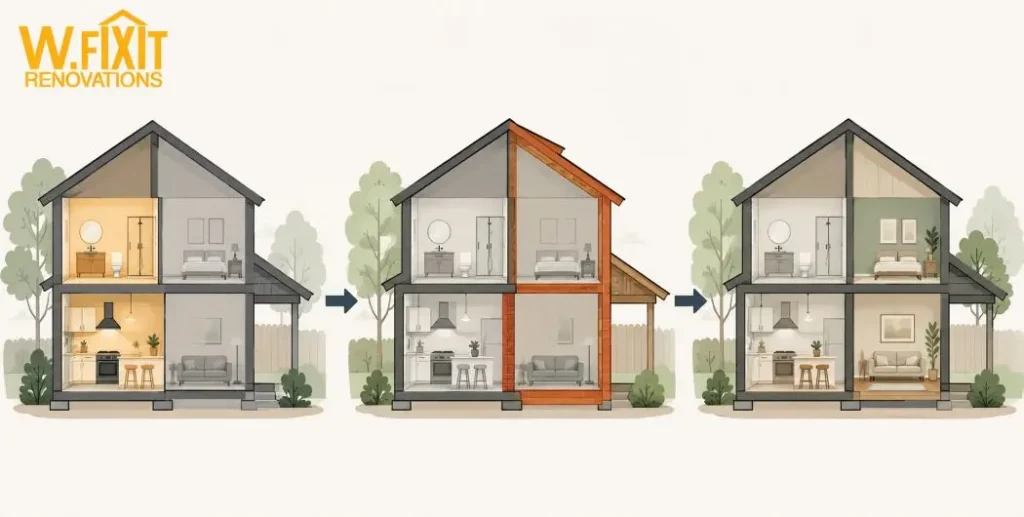
- Start with wet areas. Bathrooms and kitchens carry the highest return relative to renovation spend and are also where hidden plumbing or waterproofing issues are most likely to surface. Get these done first while you still have full budget flexibility.
- Move to structural or layout changes. If you’re planning to open up a living space or extend, do this once you understand how your budget behaved on the first stage.
- Finish with cosmetic work. Flooring, painting, and styling touches are lower risk and easier to schedule around a tighter budget later.
Staging also spreads your contingency risk. If stage one uncovers an unexpected issue, you haven’t already locked in a fixed budget across three rooms at once. Our home renovation planning guide walks through this process step by step.
Common Budget Mistakes We See in the South-East
Chasing the cheapest quote. A quote that’s dramatically lower than the others is usually missing something, whether that’s permit costs, waterproofing certification, or a realistic labour allowance. Compare quotes line by line, not just the bottom number. Our guide on choosing a renovation contractor covers the questions worth asking before you sign anything.
Skipping the contingency. It’s tempting to spend the full budget on finishes and hope nothing goes wrong. In older south-east homes, something usually does.
Underestimating access costs. Narrow side access in established suburbs can add real cost to material delivery and waste removal. Ask about this during your initial site visit, not after the skip bin arrives and doesn’t fit.
Ignoring soil and drainage. If your renovation involves any structural work, ask your builder whether a soil test is warranted for your block, particularly in clay-affected pockets of the growth corridor.
Final Thoughts
Renovation budgets go wrong for the same handful of reasons, no matter which suburb you’re in. People skip the contingency, chase the cheapest quote, or work from a national average that has nothing to do with their actual street.
South-east Melbourne adds its own wrinkles on top of that: reactive clay in the growth corridors, older housing stock in Dandenong and Springvale, tight side access in the established suburbs closer to the bay. None of that makes your project harder than anyone else’s. It just means the planning stage deserves more attention than a five-minute online calculator can give it.
Get the permit landscape right, break your budget down by category instead of one lump sum, and consider staging the work if you can’t fund it all at once. Do that, and you’ll spend far less time firefighting surprises and far more time actually enjoying the finished result.
Get a Realistic Budget for Your Suburb
Generic guides can only take you so far. If you want a renovation budget that actually reflects your suburb, your property, and your finish level, get in touch with W.FixIt for a free, no-obligation consultation. We renovate across Berwick, Narre Warren, Cranbourne, Dandenong, Hampton Park, and the wider south-east, and we’ll walk you through real numbers before you commit to anything.
Get in touch with W.FixIt for a free, no-obligation consultation →Frequently Asked Questions
Costs vary depending on whether plumbing points move, the finish level you choose, and site access. A detailed, itemised quote from a local contractor is far more useful than a single average figure pulled from a national guide.
Most renovations involving structural changes, new wet areas, or plumbing relocation require council or building surveyor approval. Check current requirements with your local council, since timeframes and thresholds can vary.
No. The Building and Plumbing Commission (BPC) replaced the VBA as Victoria’s building regulator from 1 July 2025. Builder licence checks and complaints now go through the BPC.
Staging is often more manageable financially, particularly starting with bathrooms and kitchens, since these carry the highest return and are most likely to reveal hidden issues that affect later budget decisions.
Choosing the cheapest quote without checking what it excludes. Missing permit costs, waterproofing certification, or a realistic labour allowance almost always resurface later as unplanned expenses.
Ready to plan a renovation that fits your actual budget, not a national average? Talk to the W.FixIt team about your project, or browse more south-east Melbourne renovation guides for suburb-specific advice.