
- Building Permit Victoria vs Planning Permit Victoria: What's the Difference?
- Home Renovation Permits Victoria: Which Projects Actually Need One?
- Thinking about your next renovation project?
- Council Approval for Renovations: How Requirements Vary Across Melbourne
- Building Regulations Victoria: The Role of the BPC and NCC
- Working with a Registered Building Surveyor
- Owner-Builder vs Licensed Builder: Compliance Considerations
- Frequently Asked Questions
- The Bottom Line
- Ready to renovate without the permit headaches?
Renovating your home should feel exciting. Instead, most Melbourne homeowners hit the same wall early on: permits. Nobody warns you that the paperwork can be just as important as the paint colour.
Here’s the good news. Renovation permits in Victoria aren’t designed to trip you up. They exist to keep your home safe, your neighbours happy, and your builder accountable. Once you understand the basics, the whole process gets a lot less scary.
This guide breaks down building permits, planning permits, council differences, and where the recent shake-up of Victoria’s building regulator fits in. Grab a coffee. Let’s sort this out properly.
Building Permit Victoria vs Planning Permit Victoria: What’s the Difference?
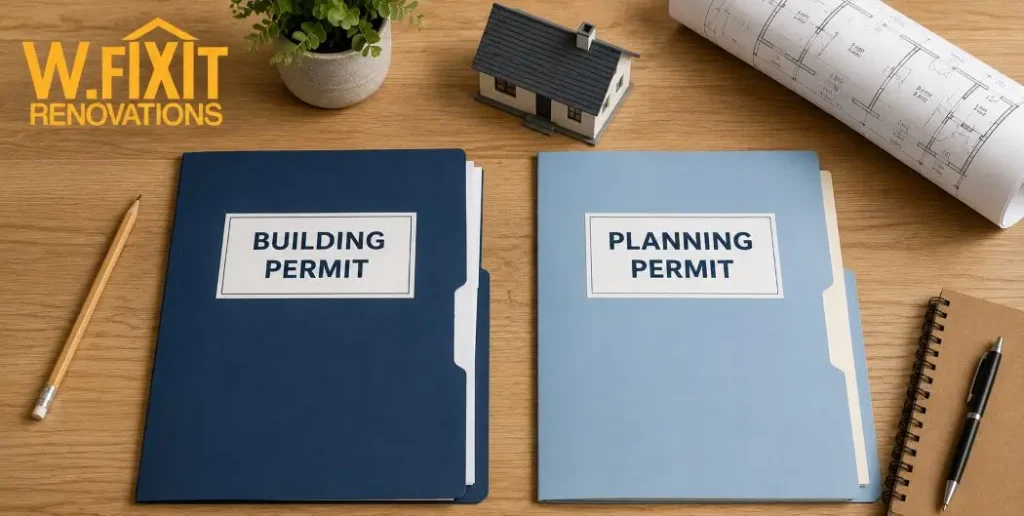
This is where most renovation confusion starts, and honestly, it’s an easy mix-up. The two permits sound similar, but they answer completely different questions.
What a Building Permit Covers
A building permit checks how you build. It confirms your plans meet the National Construction Code and Victoria’s building regulations, covering everything from structural safety to plumbing and electrical work tied into the renovation.
A registered building surveyor issues this permit, not your local council. That surveyor can work privately or through the council itself.
What a Planning Permit Covers
A planning permit checks what you’re allowed to build in the first place. Think boundary setbacks, height limits, heritage overlays, and how your renovation affects the streetscape or your neighbours.
Your local council issues planning permits under the Planning and Environment Act 1987. Not every renovation needs one. A lot of standard home renovations skip this step entirely, especially if the work stays within the existing footprint. The Victorian Government’s planning permits guide breaks down exactly when one applies.
Here’s the quick version:
| Building Permit | Planning Permit |
|---|---|
| Checks: Construction safety and compliance | Checks: Land use and development impact |
| Issued by: Registered building surveyor | Issued by: Local council |
| Governs: Building Act 1993 & Building Regulations | Governs: Planning and Environment Act 1987 |
| Common triggers: Structural work, extensions, plumbing changes | Common triggers: Setback breaches, height limits, overlays |
One important detail: if your project needs both, the planning permit has to come through first. Your building permit needs to match whatever conditions the planning permit sets.
Home Renovation Permits Victoria: Which Projects Actually Need One?
Not every renovation needs sign-off. But guessing wrong is an expensive habit.
Renovations That Typically Require a Building Permit
Structural work almost always needs one. That includes wall removal, home extensions, re-stumping, and any plumbing or waterproofing changes tied to structural alterations.
Basically, if you’re changing how the house stands up or how water moves through it, a surveyor needs to sign off.
Thinking about your next renovation project?
Get a renovation consultation with W.FixIt and we’ll walk you through exactly what your project needs, permits included.
Get a renovation consultation with W.FixIt →Bathroom Renovation Permit Victoria: A Common Grey Area
Bathrooms trip people up constantly. Swap a tapware set or repaint the vanity, and you’re probably fine without a permit. Move plumbing, alter waterproofing membranes, or shift a wall, and you’re back in building permit territory.
If you’re mapping out a full bathroom refresh, our Bathroom Renovation Cost Melbourne guide walks through realistic budgeting once permits are sorted. We’ve also broken down the specifics in our Bathroom Renovation Cost Breakdown article.
Permit Exemptions
Some minor work is exempt, like replacing a fixture with an identical one in the same spot. But exemptions are project-specific and council-specific. Don’t assume; confirm it with your registered building surveyor or council before picking up a hammer.
Council Approval for Renovations: How Requirements Vary Across Melbourne
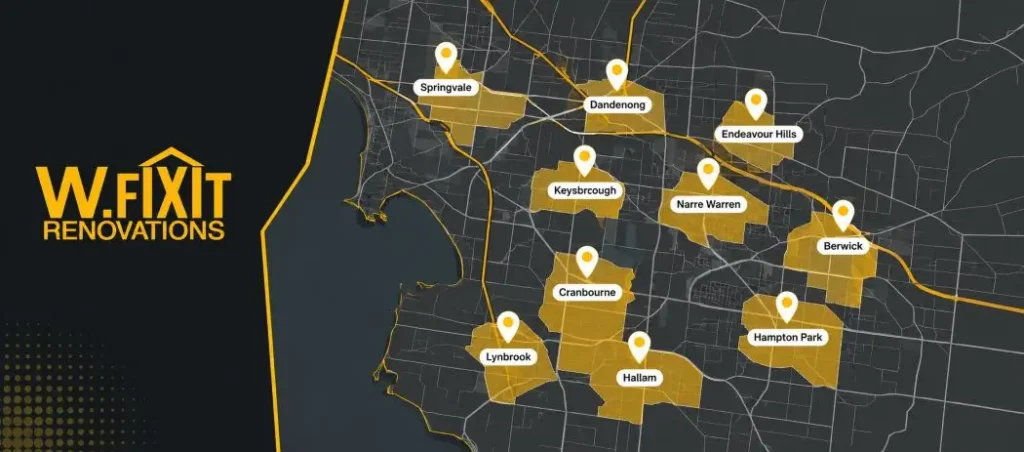
Here’s something that surprises a lot of homeowners: your suburb matters. Each council runs its own planning scheme, with its own overlays and local quirks.
If you’re renovating in Melbourne’s south-east, that means checking in with your specific council, whether that’s the City of Casey, City of Greater Dandenong, Cardinia Shire, City of Monash, City of Kingston, or Glen Eira City Council. Each one applies its own planning scheme provisions, so a renovation approved next door in a different council area isn’t automatically a green light for yours.
This applies whether you’re in Hampton Park, Hallam, Narre Warren, Narre Warren South, Berwick, Cranbourne, Dandenong, Keysborough, Lynbrook, Lyndhurst, Springvale, Clayton, Oakleigh, Bentleigh, or Caulfield. The renovation itself might be identical. The approval pathway might not be.
Your safest move: contact your council’s planning department directly, or ask your building surveyor to check the local overlay before you commit to a design.
Building Regulations Victoria: The Role of the BPC and NCC
Victoria’s building regulation landscape changed in 2025, and it’s worth understanding why.
From the VBA to the Building and Plumbing Commission (BPC)
For over a decade, the Victorian Building Authority (VBA) regulated permits, surveyors, and practitioners across the state. Following an independent review that flagged serious gaps in consumer protection, the Victorian Government moved to overhaul the system.
The Building and Plumbing Commission officially replaced the VBA on 1 July 2025, under the Building Legislation Amendment (Buyer Protections) Act 2025. As explained on the Victorian Building Authority’s own site, the BPC folded three separate bodies into one regulator: the VBA, Domestic Building Dispute Resolution Victoria, and the domestic building insurance arm of the Victorian Managed Insurance Authority.
Practically, this means one point of contact for licensing, permits, insurance, and disputes, with stronger enforcement powers than the old VBA had. If you’re renovating now, the BPC is the regulator you’re dealing with, not the VBA.
National Construction Code (NCC) Compliance
Every building permit gets assessed against the National Construction Code, the technical rulebook covering structural performance, fire safety, energy efficiency, and accessibility. You don’t need to memorise it. Your registered building surveyor checks your plans against it as part of issuing your permit.
Working with a Registered Building Surveyor
What They Do and Why You Need One
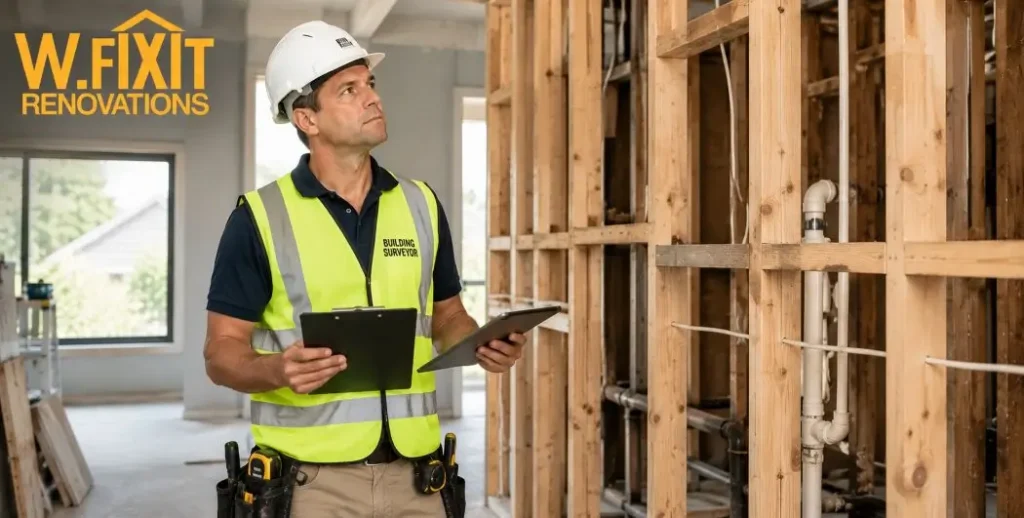
A registered building surveyor reviews your renovation plans against building regulations, issues your building permit, and schedules the mandatory inspections that happen throughout construction. Skip this step, and your renovation isn’t legally allowed to proceed.
Building Inspections and the Occupancy Process
Most renovations involve inspection checkpoints at key construction stages. Once everything checks out, your surveyor issues either a certificate of final inspection or, for larger projects, an occupancy permit confirming the space is safe to use.
Owner-Builder vs Licensed Builder: Compliance Considerations
What Owner-Builders Can (and Can’t) Do
Fancy managing your own renovation? Victoria allows it, within limits. If your project’s value exceeds $16,000 (labour and materials combined), you’ll need a certificate of consent from the BPC before you can act as an owner-builder. You’re also limited to one owner-built property every five years, and you need to genuinely intend to live in it. Consumer Affairs Victoria’s owner-builder page covers the full obligations if you’re weighing this option.
Licensed trades are non-negotiable regardless of your owner-builder status. Plumbing and electrical work must go through registered, licensed practitioners. No exceptions, no shortcuts.
Why Homeowners Choose a Licensed Renovation Contractor
Plenty of homeowners start down the owner-builder path, then realise permit paperwork, inspection scheduling, and compliance tracking is a part-time job they didn’t sign up for.
A licensed renovation contractor handles that load for you: permit applications, surveyor liaison, inspection timing, the works. It’s less about handing over control and more about handing over the admin headache.
Frequently Asked Questions
It depends on scope. Structural changes, extensions, and plumbing work tied to structural alterations generally need one. Purely cosmetic updates usually don’t. Check with a registered building surveyor before you start.
A planning permit covers land use and development impact, issued by your council. A building permit covers construction safety and compliance, issued by a registered building surveyor.
Sometimes. Moving plumbing or altering waterproofing usually triggers a building permit. Swapping fixtures like-for-like often doesn’t. Confirm your specific scope with a surveyor.
Registered building surveyors issue building permits, operating under the regulatory framework of the Building and Plumbing Commission (BPC), which replaced the VBA on 1 July 2025.
If your project needs a planning or building permit and you skip it, you’re risking fines, stop-work orders, and complications down the track, including at resale. Always confirm requirements before starting work.
The Bottom Line
Permits aren’t the enemy of a good renovation. They’re the safety net. Understanding the difference between a planning permit and a building permit, knowing your council’s specific requirements, and working with a registered building surveyor turns a potentially stressful process into a manageable checklist.
Melbourne’s south-east suburbs each have their own quirks, but the fundamentals stay the same: check early, confirm with the right authority, and don’t assume your neighbour’s approval applies to you.
Ready to renovate without the permit headaches?
Visit W.FixIt to book a consultation, or browse our Renovation Blog for more Melbourne-specific planning guides.
Get a renovation consultation with W.FixIt →