
- Is a Small Bathroom Renovation Worth It?
- Small Bathroom Renovation Cost in Melbourne
- Best Layout for a Small Bathroom
- Small Bathroom Design Ideas That Make a Big Impact
- Maximising Storage in a Small Bathroom
- Small Bathroom Renovation on a Budget
- Small Bathroom Renovation Trends in 2026
- How Long Does a Small Bathroom Renovation Take?
- Small Ensuite Renovation Ideas
- Small Bathroom Renovations for Apartments
- Why Choose W.Fixit for Your Small Bathroom Renovation
- Frequently Asked Questions
- Final Thoughts
If you’ve ever done a small yoga pose just to reach the towel rail, you already know the struggle of a tiny bathroom. Melbourne’s older homes and apartments are full of them, and most owners assume a small bathroom renovation means small results. It doesn’t.
A well-planned small bathroom renovation can outperform a much bigger budget reno, simply because every centimetre gets used on purpose. This guide walks through realistic costs, smart layouts, design ideas, and the technical details that actually matter, so you can plan with confidence instead of guesswork.
Is a Small Bathroom Renovation Worth It?
Yes, and the numbers back this up. Bathrooms sit alongside kitchens as the rooms buyers scrutinise most closely during an inspection, and renovated bathrooms consistently return a strong share of their cost at resale. Industry analysis citing CoreLogic data points to bathroom renovations lifting property value by roughly $10,000 to $30,000 in metropolitan markets, with typical ROI sitting in the 60 to 80 percent range depending on the suburb and finish quality.
That’s the resale case. The liveability case is even simpler. You use this room twice a day, every day. A bathroom that works properly, with good storage, proper ventilation, and a layout that doesn’t fight you, pays you back in small annoyances avoided for years.
Common Signs It’s Time to Renovate
- Visible mould around grout lines or silicone, even after cleaning
- Tapware, toilet, or vanity that looks dated next to the rest of the home
- Poor airflow or a bathroom that never quite dries out
- A layout that makes the room feel smaller than it actually is
Small Bathroom Renovation Cost in Melbourne
Let’s talk money, because vague answers help nobody. According to the Housing Industry Association, the average bathroom renovation spend across Australia sits around $26,000. Smaller bathrooms cost less than that average, since there’s simply less floor and wall area to tile, plumb, and finish.
Three Birds Renovations puts a budget-tier small bathroom renovation at roughly $8,000 to $15,000, with mid-range projects running $15,000 to $35,000 depending on fixtures and the extent of layout changes. Melbourne specifically tends to land in the $24,000 to $28,000 bracket for a standard, full-scope renovation.
| Renovation Tier | Approx. Cost Range | What It Usually Includes |
|---|---|---|
| Budget / Cosmetic Refresh | $8,000 – $15,000 | New tapware, paint, updated vanity, same layout, same plumbing positions |
| Mid-Range Renovation | $15,000 – $28,000 | Quality tiles, new fixtures, partial layout changes, upgraded waterproofing |
| Premium / Full Renovation | $28,000 – $40,000+ | Designer fixtures, custom joinery, significant layout changes, high-end tiling |
What Drives the Cost Up (or Down)
Most of a bathroom’s cost hides behind the walls, not in the parts you can see. Waterproofing membranes, plumbing rough-in, ventilation, and electrical circuits all sit underneath the finishes, and every trade involved needs to be licensed and sequenced correctly. Moving a toilet or shower to a new wall adds plumbing cost fast. Keeping the existing layout, by contrast, is the single biggest budget saver available to you.
Tiling labour in Melbourne typically runs in a similar range to other capital cities, with tilers charging roughly $60 to $150 per square metre and plumbers billing by the hour on top of materials. Council permit fees, when required, generally add a few hundred to a couple of thousand dollars depending on scope.
Best Layout for a Small Bathroom
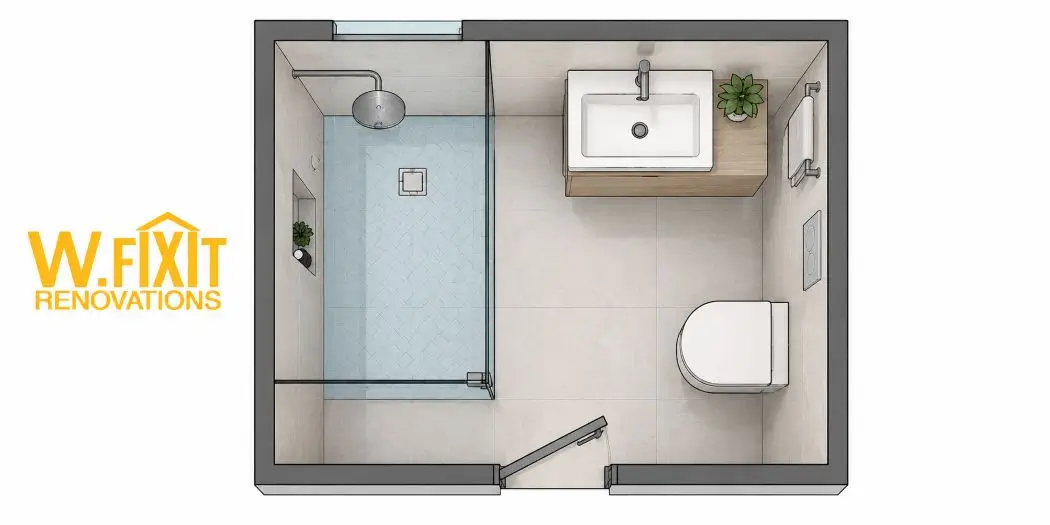
Floor space matters less than how you use it. A smart layout beats a slightly bigger room with a poor one, every time.
A walk-in shower without a step or hob opens up a small bathroom visually, since there’s no frame or barrier breaking up the sightline. Pair it with a frameless shower screen, and the eye reads the whole room as one continuous space rather than a shower stall bolted onto a bathroom.
Wall hung vanities and floating vanities help too. Lifting the vanity off the floor exposes more visible floor area, which makes the room feel larger even though you haven’t moved a single wall. It also makes the floor easier to clean, which is a small but real bonus.
Walk-In Shower vs Shower-Over-Bath
A shower-over-bath setup saves space on paper, but it can make a small bathroom feel boxier in practice. A walk-in shower, especially with a frameless screen, generally reads as more open. If you genuinely use a bath, though, don’t remove one purely for trend reasons. Function should win that argument.
Small Bathroom Design Ideas That Make a Big Impact
This is the fun part, and where good decisions cost nothing extra but pay off visually for years.
Tiles That Make a Small Bathroom Look Bigger
Large format tiles reduce the number of grout lines in a room, and fewer grout lines read as more space to the eye. Floor-to-ceiling tiling on at least one wall extends that effect vertically, drawing the eye up rather than stopping at chest height. Continuing the same floor tile into the shower recess, instead of switching to a smaller tile, keeps the floor plane visually unbroken.
Lighter, more cohesive palettes generally support this effect better than high-contrast schemes, though Australian design trends for 2026 are shifting away from stark white. Metricon’s 2026 trend forecast points to warmer, earthier tones, including terracotta and soft greens, replacing the cooler neutrals that dominated bathrooms for years. A warm, mid-tone palette can still feel spacious if it stays consistent across floor and walls.
Lighting and Natural Light
LED mirrors add usable task lighting without eating into wall space the way a pendant or sconce would. Where a window or skylight is structurally possible, natural light does more for a small bathroom than almost any finish choice. If neither is on the table, layering a few light sources, rather than relying on one central downlight, avoids harsh shadows and makes the room feel considered rather than functional-only.
Recessed Niches
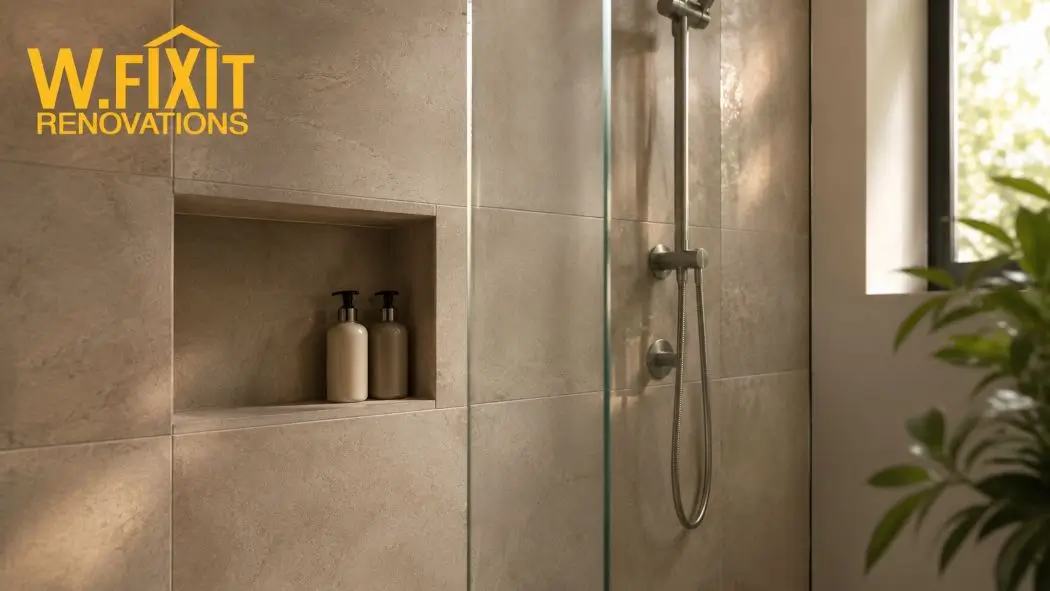
A recessed niche built into a shower wall replaces a shelf or caddy with something that looks intentional. It also avoids the slow accumulation of bottles balanced precariously on a corner shelf, which, let’s be honest, every household with a small bathroom knows too well.
Maximising Storage in a Small Bathroom
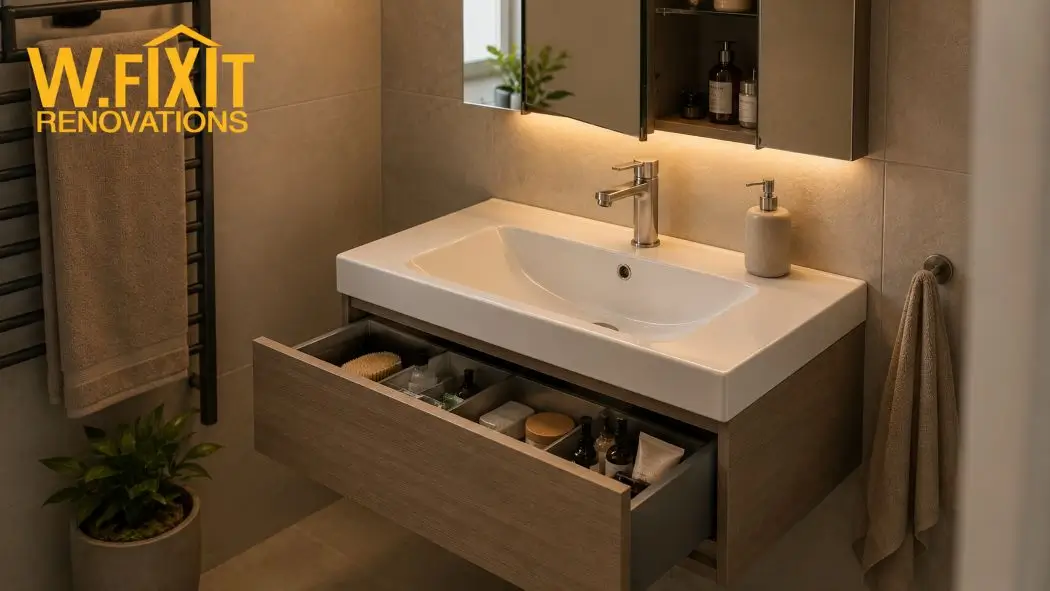
Storage is where small bathrooms either win or lose the daily battle, and it’s currently one of the most active areas of bathroom design in Australia. Banana Bathrooms reports that drawer-style vanity units have become one of the most requested upgrades in their 2026 projects, since full-extension drawers give clear visibility of everything stored, instead of the dig-and-hope approach of a cupboard.
Pairing a drawer vanity with a recessed mirrored shaving cabinet keeps everyday items close at hand while staying visually tidy. Vertical storage, like a tall narrow cabinet beside the vanity, also uses wall space that a standard floor plan usually wastes.
Space-Saving Solutions Worth Considering
- Slim-profile wall hung vanities with internal drawer organisers
- Recessed mirrored cabinets instead of surface-mounted ones
- Shower niches sized for everyday bottles, not just decoration
- Over-toilet shelving in awkward, otherwise unused corners
Small Bathroom Renovation on a Budget
You don’t need every premium feature to get a premium feel. Spend where it actually shows and holds up: waterproofing, good tapware, and a quality shower screen. These are the parts you touch daily and the parts that are expensive to redo later if they fail.
Save on the parts buyers and daily users notice less: standard-size fixtures instead of custom-cut ones, simpler tile layouts with fewer cuts and offcuts, and keeping plumbing in its existing positions. Avoiding fixture relocation alone can save a meaningful chunk of the plumbing budget, since moving a drain or supply line costs far more than reusing the one already there.
Small Bathroom Renovation Trends in 2026
Australian bathroom design in 2026 is moving away from clinical and toward calming. Wattle Court describes the shift as a move toward warmer, softer palettes, with greige (that grey-beige middle ground) leading the way, layered with terracotta, ochre, and moss tones for depth.
Storage-as-design is the other major thread, as covered above, with drawer vanities and recessed cabinetry replacing open shelving in many new projects. Frameless shower screens remain the default choice for open, low-maintenance small bathrooms rather than a premium add-on.
How Long Does a Small Bathroom Renovation Take?
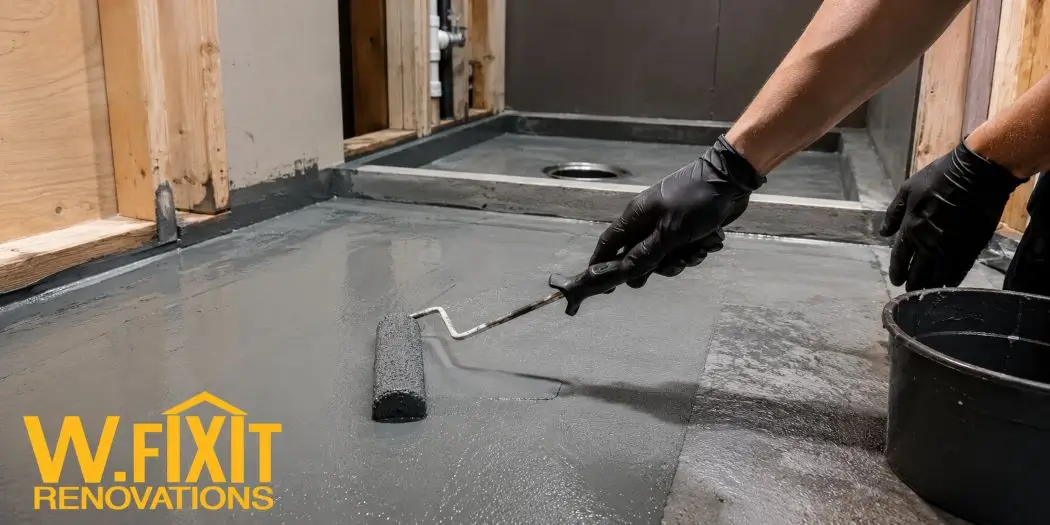
Plan for two phases: planning, and construction. Construction itself typically takes 3 to 6 weeks for a standard bathroom, with smaller bathrooms generally sitting toward the faster end of that range simply because there’s less to tile and plumb.
Add planning, design selections, and supplier lead times on top, and the full process often runs 6 to 8 weeks start to finish. Cosmetic-only updates, like new tapware and paint without layout changes, can be done in as little as 1 to 2 weeks.
One stage that genuinely cannot be rushed is waterproofing cure time. Under Australian Standard AS 3740:2021, the membrane needs to cure fully, generally 24 to 72 hours, before tiling can start. Skipping that step to save a day or two is exactly how bathrooms develop leaks and mould within a few years, so a contractor quoting an unrealistically fast turnaround is worth questioning.
Small Ensuite Renovation Ideas
Ensuites carry an extra constraint: they sit right next to a bedroom, so noise, ventilation, and night-time light all matter more than in a standalone bathroom. A quiet exhaust fan and a dimmable LED mirror light go a long way toward making a 2am bathroom trip less jarring.
Layout-wise, the same principles apply, just with tighter margins. A walk-in shower with a frameless screen, paired with a wall hung vanity, tends to suit ensuites particularly well, since both choices free up visual and physical space in a room that’s often the smallest in the house.
Small Bathroom Renovations for Apartments
Apartment renovations come with one extra step most houses don’t need: strata or owners corporation approval, particularly for anything touching plumbing, waterproofing, or shared service risers. Check this before you fall in love with a layout that moves the toilet, because the answer might simply be no.
Within those constraints, compact fixture choices, like a slimline toilet, a corner vanity, or a shorter bath, help apartment bathrooms punch above their literal square footage. The same large-format tile and frameless screen principles from earlier in this guide apply just as well here.
Why Choose W.Fixit for Your Small Bathroom Renovation
A small bathroom renovation has very little room for error. Waterproofing, plumbing, and tiling all have to be right the first time, because there’s no extra space to hide a mistake. W.Fixit handles small bathroom renovations across Melbourne’s south-east, including Hampton Park, Narre Warren, Berwick, and Cranbourne, with a focus on layouts and finishes built for genuinely small footprints, not scaled-down versions of a big bathroom plan.
From waterproofing compliant with AS 3740 through to tiling, plumbing, and custom joinery, our team manages the full bathroom renovation process so you’re not coordinating five trades yourself. If you’re ready to talk layouts and a realistic budget, get in touch for a free quote.
Frequently Asked Questions
A budget small bathroom renovation in Melbourne generally starts around $8,000 to $15,000, with mid-range projects running $15,000 to $28,000 and full premium renovations going higher depending on fixtures and layout changes.
Generally, yes. Bathroom renovations typically return 60 to 80 percent of their cost at resale, and the daily liveability benefit, better storage, proper ventilation, a layout that actually works, often matters more than the resale figure for owner-occupiers.
Construction typically takes 3 to 6 weeks for a standard renovation, with smaller bathrooms often finishing faster. Including planning and design selections, the full process usually spans 6 to 8 weeks.
A walk-in shower with a frameless screen, paired with a wall hung vanity, generally maximises both visual and physical space compared to a shower-over-bath layout with a floor-standing vanity.
A walk-in shower with a frameless screen, paired with a wall hung vanity, generally maximises both visual and physical space compared to a shower-over-bath layout with a floor-standing vanity.
Large format tiles reduce visible grout lines, and floor-to-ceiling tiling on at least one wall extends that effect vertically. Continuing the same tile from floor into the shower recess keeps the floor plane visually unbroken.
Final Thoughts
A small bathroom renovation isn’t about cramming features into a tight space. It’s about choosing the right layout, spending on the parts that matter, and trusting design decisions that have actually been tested in small Melbourne bathrooms, not just on Pinterest. Get those fundamentals right, and a compact bathroom can feel every bit as considered as a much larger one.
If you’re planning a small bathroom renovation in Melbourne’s south-east, W.Fixit can walk you through layout options, a realistic budget, and a timeline that holds up. Get in touch for a free quote and let’s talk about your space.